 By Metcan
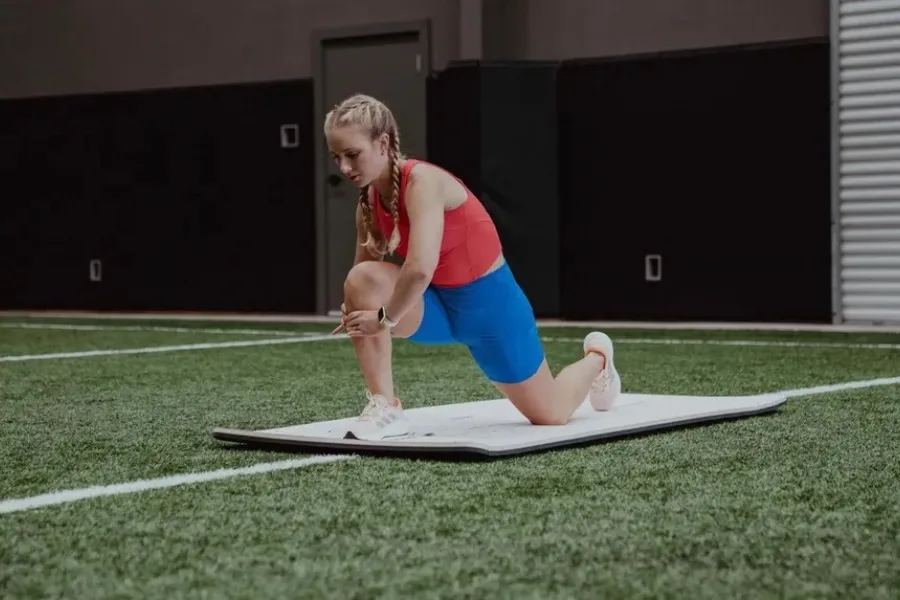
juggling work with domestic routines could prove challenging if fitness is also on the list of your daily obligations. The thought of a long workout can make skipping exercise the easier choice to make.
Micro-workouts are seen as a simple solution by the majority of people. By breaking workouts into smaller parts spread across the day, you can turn short episodes of activity into easy choices in the course of your day.
Micro-workouts refer to exercises of brief duration that may last for anything between a few minutes to a quarter of an hour. Micro-workouts can be performed during the day at different times.
An example of micro-workouts could be that you do squats in the morning, push-ups when at work and mobility exercises before going to bed at night.
The key point of micro-workouts is not necessarily making them very vigorous but ensuring that you engage in movements as part of your daily routine and thus turn it into enjoyable experience.
The practice of short workout sessions can seem less daunting. When exercises have only a few minutes long, one may not find many reasons to skip them.
Repetitive small workouts throughout the days can help transform exercising into an everyday habit and not just an activity done when there is enough free time.
It is possible to create a full body workout using micro workouts where exercises are grouped into short workouts while keeping focus on all the major muscle groups.
Morning: Lower Body
Begin your day with little lower body exercises for around 5-10 minutes:
- Bodyweight squat
- Reverse lunges
- Glute bridge
- Calf raises
Be sure not to rush while doing exercises, and instead, perform them slowly.
Noon: Upper Body
Upper body exercises can be included in your short lunch break such as:
- Wall push-ups or incline push-ups
- Shoulder taps
- Resistance band rows
- Light dumbbell push press
This can help avoid being glued to your desk all day.
Finish your day with short exercises to train your core and movement.
Focus on the following:
- Bird dogs
- Dead bugs
- Plank
- Gentle hip stretches
- Thoracic rotation
Keep the movements controlled and focus on good technique.
Consistency becomes easier when your workouts are connected to existing routines.
You can squeeze in some exercise after you brush your teeth, during your lunchtime or just after you finish your work.
Keep simple and small fitness gear, for example, gym mat, next to you in case you want to use it later.
It is good to have a target for exercise for the day. For example, make a decision that you will do movements for at least five minutes when you are busy. If you have the time you can continue exercising.
Many people fall into the trap thinking that every micro workout has to be as intense as their gym workout. This can lead to increased fatigue and harm the ability to stick to the schedule.
Instead you will need to vary the intensity of your workouts. Some workouts can be strength-oriented while others might work on mobility or cardio.
Even if the workouts are short, recovery is still important.
As you become more fit, take measures regarding increasing the number of repetitions, resistance and length of workouts, though it is not necessary to change everything at once.
When it comes to beginners, properly executing exercises and sticking to their routine may be better than starting to do advanced workouts right away.
Micro-workouts are a perfect choice for busy people, beginners who find lengthy training intimidating, and individuals who have been unsuccessful at maintaining regular workout habits.
However, the former should always be a supplement to the latter. Your fitness goals and level should determine your exercise routine.
Complete sessions are not always needed for exercising; the points of motion can be split into a few shorter sessions during the day.
A full-body workout plan, developed with the help of micro-workout principles, should offer various athletic modes as well as several short workouts and should include strength and mobility workouts, core workouts, and easy cardio exercises. Starting from simple things and adding exercise into your everyday routine will yield great results.
Breaking exercise into short, manageable sessions is a great way to build consistency, especially on busy days. I also like finding small, creative ways to make everyday routines more engaging. If you’re looking for a quick bit of fun between movement breaks, Bulin 47 AI lets you upload a photo and appear in a viral Bulin 47 x Kevin Wai freestyle video. It supports English and Spanish, with options starting at $9.99: https://bulin-47.app
Micro-workouts are a practical reminder that small, consistent steps can make a busy day feel more manageable. The same principle applies to everyday tasks: when you need to turn notes, schedules, or workout plans in images or PDFs into usable text, https://glm-ocr.com offers free online OCR, including table-to-Markdown and formula-to-LaTeX conversion. It supports 8+ languages, with an API available too.
Micro-workouts make fitness feel more manageable: a few minutes of movement between daily routines can be easier to sustain than waiting for a free hour. I like the idea of keeping sessions simple and focusing on consistency rather than pushing hard every time. If you’re learning exercises from YouTube, https://summarizeyoutubevideos.com can turn a video into a quick AI summary, key points, timestamped chapters, and a transcript—handy for reviewing instructions before you get moving. It’s free, requires no signup or plugin, and can also transcribe videos without captions.
Good to see micro workouts a simple way to build consistency explained step by step instead of skipped over. If you want a trip paced around you instead of a bus schedule, china tour packages is worth a look.
This is one of the more practical reads on micro workouts a simple way to build consistency I have found lately. Looking forward to more posts in this direction. If you play roguelike survivors, pokemon survivor is worth a look.
This is one of the more practical reads on micro workouts a simple way to build consistency I have found lately. Looking forward to more posts in this direction. If you play roguelike survivors, poketide pokemon game is worth a look.
Most write-ups on micro workouts a simple way to build consistency stay vague, so the concrete points here stand out. Small details like these save a lot of trial and error. I have been trying d2 survivors browser game lately and it holds up well.
The most visible feature of this article is its shape: a guide to micro-workouts built as a full day. The article, from fithealthHQ, is titled “Micro-Workouts: A Simple Way to Build Consistency”. Its H1 introduces the idea: splitting exercise into short sessions helps busy people stay consistent. The article’s structure is an introduction, a definition (“What Exactly Are Micro-Workouts?”), a full-day example routine (“Example of a Full Time Routine”), an evening core and mobility list (“Evening: Core and Mobility”), habit-building (“How to Make Micro-Workouts a Habit”), intensity (“Do Not Attempt to Maximize the Intensity of Each Session”), gradual progress (“Make Progress Gradually”), and who it is for (“Who Will Make Use of Micro-Workout Guidelines?”). The comment area is titled “47 thoughts on “Micro-Workouts: A Simple Way to Build Consistency”” and the form “Leave a Reply”, with Comment, Name, Email and Website fields and a “Post Comment” button, a save-info checkbox, no notification checkbox, no login wall and no captcha control. The count is 47, and this is comment page 2, showing 20 entries.
The article’s definition is its core: micro-workouts are short sessions lasting a few minutes, spread through the day. The full-day example routine gives morning lower body about 5 to 10 minutes, midday upper body, and evening core and mobility. The habit section says to anchor exercise to existing daily habits, keep equipment handy, and set daily goals. The intensity section says not to chase high intensity every time, but to vary intensity and value recovery. The progress section says to gradually increase reps and resistance as fitness improves, and for beginners to focus on form and consistency first. The audience section says micro-workouts suit busy people and beginners, and that they supplement rather than replace full training. The comment area is titled “47 thoughts on “Micro-Workouts: A Simple Way to Build Consistency”” and the form “Leave a Reply”, with Comment, Name, Email and Website fields and a “Post Comment” button, a save-info checkbox, no notification checkbox, no login wall and no captcha control.
The article’s information structure is worth noting. It gives the what, micro-workouts: short sessions, a few minutes, spread through the day; the how, a full-day example routine: morning lower body, midday upper body, evening core and mobility; the habit, anchor to existing habits, keep equipment handy, set daily goals; the caution, do not maximize intensity every session, vary it, value recovery; the progression, gradually increase reps and resistance; and the audience, busy people and beginners, a supplement, not a replacement. The article is a guide, not a single workout: it separates the day into morning, midday and evening, and each part into its own list, so the reader can follow one part at a time. The page also has ad blocks, but they do not affect the body being substantive, and the comment list on this page shows 20 entries.
That way of working, breaking a single thing into named parts so each can be followed separately, is the same logic as the Dual Subtitles Generator, a tool that creates bilingual subtitles for a video. The article separates a workout day into parts, morning, midday and evening, and each part into its own list, and the generator separates a video’s subtitles into two tracks, the original and the translation, shown side by side on one screen so the viewer can follow both at once. The tool accepts MP4, WebM and MOV files up to 500 MB, shows two subtitle tracks side by side on one screen, and lets the viewer download each track separately as an SRT file. Videos are processed locally, so the files never leave the device, and the service runs on a credit system. The parallel is direct: the article breaks a day into parts, and the generator breaks a video’s subtitles into two tracks.
One question the article leaves open is how the reader should combine the micro-workouts with a full training session. The article gives a full-day example routine, morning lower body 5 to 10 minutes, midday upper body, evening core and mobility, and says micro-workouts supplement rather than replace full training, but does it say how the reader should combine them, on the same day, on different days, or as a replacement when time is short? The article’s “Who Will Make Use” section says micro-workouts are a supplement, not a replacement, but does it give the rule for combining them? The answer would help the reader judge whether the article is a standalone routine or a complement. The article’s structure, a full-day routine plus a supplement note, suggests it is a complement, but the text itself does not say how to combine them.