 By Metcan
Though the end of a hectic day should signal the end of work responsibilities, sometimes reaching home is not enough to stop you worrying about unresolved problems, difficult conversations, upsetting feedback, or overall stressful situations. You may begin to feel annoyed, mentally exhausted, or emotionally sensitive, even if there is no reason for it anymore. The phrase emotional hangover is often used to describe such state of constant fatigue. Yoga for stress release has been gaining popularity as a good way to relax and connect with one’s body.
An emotional hangover is a term that means the effects of difficult situations that were either difficult or traumatic. It can result from stress at work, family problems, or too long social gatherings. Possible manifestations of such phenomenon include:
- Feeling mentally tired despite feeling physically rested.
- Constantly thinking through conversations, conflicts, etc.
- Experiencing irritability and difficulties concentrating.
- Suffereing from emotional overload.
- Finding it hard to calm down before sleep.
One can use yoga to change the state from hard-working day to calm evening.
Such approaches aid people in calming down, becoming more conscious of their feelings, and managing daily stress.
Regular yoga practice can also improve sleep quality, emotional health, and relaxation. But this should support not replace professional help when emotional distress is chronic or intense.
Balasana
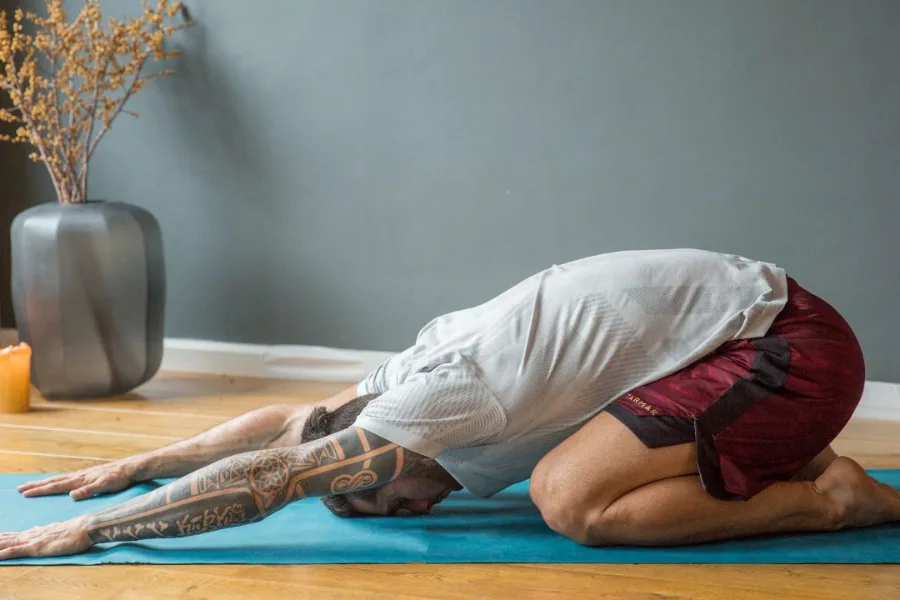
The Child pose is a soothing resting position that induces calm. Get on your knees, pull your hips to the heels, and extend your hands. Place the forehead on the ground, and breathe slowly.
Marjaryasana-Bitilasana
Move from a gentle arch to a rounded back, coordinating each move with breath. This helps in easing the body tension after long sitting hours.
Viparita Karani
Lie on your back and put the legs against the wall. Stay relaxed and breathe normally. This restorative pose can become a relaxing way to end the day.
Paschimottanasana
Sit with your legs extended out, and gently bend forward from the hips. Don’t force the stretch. This activity encourages conscious movement and awareness of breathing.
Corpse Pose (Savasana)
Lie comfortably on your back with your arms placed along your sides. Close your eyes and simply allow your breathing to become even and appropriate. Let yourself feel all the physical sensations, while avoiding evaluating your emotions.
Calm breathing contributes to alleviating stress during yoga practice. Inhale quietly through your nose and, while exhaling, let your breath last longer without effort. You can perform this for three to five minutes while seated comfortably. If you feel dizzy or unwell, go back to regular breathing.
You don’t need long practices to relax. An evening routine of 10-15 minutes can involve:
- Two minutes of gentle breathing
- Three minutes of Cat and Cow poses;
- Three minutes of Child Pose;
- Three minutes of Legs Up the Wall;
- Three minutes of Corpse Pose.
Choose movements that feel comfortable and don’t do anything that could cause discomfort. Difficult emotional experiences can leave you exhausted long after they happen. Gentle yoga is an opportunity to unwind, release tension, and become more aware of your emotional needs.
Instead of anticipating that you’ll feel better right away, allow your mind and body some time to calm down. An evening yoga practice that’s regular, along with sufficient sleep and clear boundaries, can serve as an important component of your self-care routine.