 By fithealthhq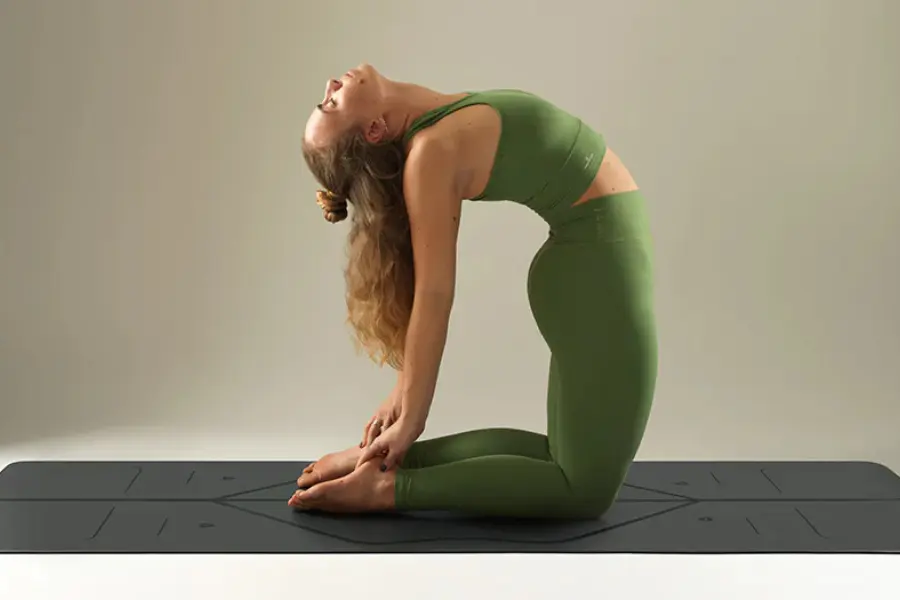
Today, most people spend their days sitting down for a long time (especially at work), as well as using screens of all types (ie computers/tablets/televisions) and dealing with mental stress. All of these habits can lead to back stiffness, tightness in the shoulders, and stress that has built up in the body. Gentle backbend yoga poses are an excellent way to release tension, improve posture, and create a sense of relaxation throughout the body and mind. Many wellness experts recommend using yoga for stress relief as a natural way to calm the nervous system and improve flexibility.
There’s no reason that backbends can be difficult, challenging or extreme. Minor changes from one type of backbend to another type (or the same type if modifying the alignment of the body) can create significant stretching of the chest, shoulders and spine, resulting in deeper breathing and bringing a sense of relaxation to the body and mind.
Backbends open up the whole front / anterior part of your body; primarily the chest and lungs when you perform backbends, your chest expands and allows you to breathe more deeply, which will help relieve stress and anxiety. When you perform a backbend with awareness, you will stimulate the nervous system and create increased blood flow through the body.
Using yoga for stress relief by incorporating gentle backbends into your routine can be very beneficial for relieving some of the negative effects of prolonged periods of poor posture due to extended time being at a desk or prolonged use of the phone. With time, using backbends regularly will increase the flexibility of your spine and decrease tension in your muscles.
Easy backbend techniques that are good for decreasing stress and helping you relax can be performed by anyone at home without requiring any advanced yogic abilities.
Cobra (Bhujangasana) is one of the easiest beginner poses for backbends. It lightly lengthens each vertebra along the spine and opens up the chest and shoulders. This will reduce tension on the lower back through the act of allowing you to take full breaths while in this position. It is the easiest pose for anyone to use yoga as a means of relieving stress on a daily basis simply by doing it.
Bridge (Setu Bandhasana) strengthens the back and lengthens the chest, neck, and spine. It will provide you with an effective stretch for releasing accumulated tension and stress in your lower back and hips. By promoting increased blood flow to both your body and your mind, this pose will also help you feel more relaxed after a long day.
A mild or modified version of Camel (Ustrasana) can be very helpful in relieving some of the stress you may be feeling. An example would be placing both hands on your lower back while bringing your chest upward instead of bending back that much, which would be suitable for you if it were the first time you’ve done this type of back then helps to ask.
The Sphinx Pose is an easy back-bending pose that can be practiced without too much energy. It provides a gentle stretch to the spine and also improves the posture of the body and allows for relaxed breathing. The Sphinx Pose is an excellent place for a beginner who wants to try Yoga for stress relief and does not want to put too much strain on the low back.
Backbend poses are easy on the body in general, but you should be careful when practicing them. Start off slowly, and do not attempt to force your body into a deeper stretch than is comfortable for you. Focus on breathing, and use slow, steady movements.
It is also a good idea to perform some basic stretches prior to attempting any backbend position to properly warm up your entire body. Engaging your core muscles during the performance of a backbend will help protect your low back and maintain proper alignment of your spine.
Listen to your body when practicing backbend poses. If you experience any pain or discomfort at all while in the pose, ease out of the pose gently, and take a moment to rest and recover. If you practice regularly, you will naturally become more flexible and comfortable doing backbend poses.
To maximize your experience of yoga for stress release, you should combine a series of gentle backbend poses with breathing techniques and restful poses. A simple routine could consist of five to ten minutes of warming up with basic stretches, followed by a few backbend poses, and finishing with a restful pose such as corpse pose.
The postures known as Child’s Pose and Savasana create a nurturing backdrop where incorporating deep, rhythmic breathing into the postures enhances the stress-relieving effects. Performing any type of Yoga postures for 15 minutes daily can greatly decrease both physical tension and mental fatigue.
Gentle back-bending Yoga postures are easy techniques to release tension that has been held in the body. In addition, they open the chest for improved posture. Drawing upon these postures will facilitate deep breathing that soothes the mind and promotes relaxation. Additionally, performing Yoga for Stress release will regularly improve flexibility, decrease stress, and contribute to your overall health.
Ultimately, regular practice and mindful movement with gentle backbends will become a ritual of relaxation, rejuvenation, and establishing a healthy balance of body and mind.
This topic really needed to be talked about. Thank you.
I hadn’t considered this angle before. It’s refreshing!