 By Metcan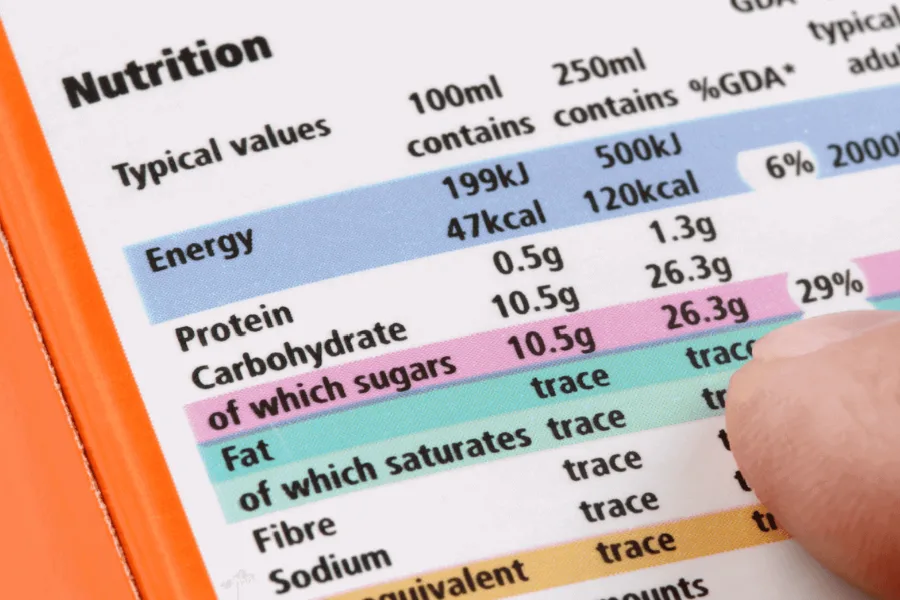
How to Read Nutrition Labels: To make better food decisions, it is easiest to understand food labels. When you are at the store looking for packaged snacks, cereals, or health drinks, the information on the label will help you monitor your calories, nutrients, and servings. However, a lot of people have difficulty and become confused by the wording, and they may just miss out on the important information. Here are some ways to learn how to properly read a label, so you can make better options when it comes to food.
The first thing to look at any the label of any nutrition food label is the serving size. This is the amount of food the other values are based on. Many items are packaged with more than one serving, but a person might eat it all in one serving or it’s hard to know. You will want to always check the number of servings in a package before meal planning.
Calories provide a quick perspective of the energy in a food serving. Calories matter to think about, but they are still not the full picture. To achieve a balanced lifestyle you will want to consider calories in relation to the actual nutrients. For example, 200 calories of whole food (i.e., fruits, nuts) will offer significantly greater benefits than 200 calories of a sugary processed snack. This ability to track your calories in a day can assist in weight management (thereby counting plays a role in that process), as well as in maintaining energy throughout the day.
Macronutrients come as part of the nutrition label, e.g., fats, carbohydrates, and proteins. They are the building blocks of one’s health, however, always focus on quality over quantity.
- Carbohydrates – whole grains and highly fibrous options.
- Proteins – quality wholesome stable options, and if vegetarian, understand what vegetarian protein sources Indian are available to you e.g. beans, chick peas, paneer, soy, quinoa.
- Fat – Choose healthy fats while minimizing trans fats and saturated fat. Nut, seed and olive oil fats, are great healthy options.
You’ll obtain meal balance simply by focusing on these considerations.
Plenty of packaged food, which may or may not be marketed as healthy, has unsuspecting high levels of added sugars and sodium. On nutrition labels, added sugars can be identified by different terms, including corn syrup, fructose, and maltose. Added sodium ties directly to chronic health issues such as, but not limited to, obesity, diabetes, and high blood pressure.
Similarly, high sodium levels may not always taste salty, but it can have implications for heart health. Be aware of the ingredients and select products with less added sugars and sodium.
The % Daily Value tells you how much a nutrient in a serving contributes to your daily diet, using a daily diet of 2,000 calories. A basic rule of thumb is:
- 5% DV or less = Low in the nutrient
- 20% DV or more = High in that nutrient
For example, if a food item says 25% DV of protein, it is a good source of protein. Conversely, if a product says 2% DV of fiber, this might not be sufficient for those who want to improve digestion and fullness in their meals.
Food labels can be confusing as seen on different products like “low-fat,” “organic,” or “natural.” Just because a food product is advertised as “low-fat,” it does not mean the food is necessarily healthy, as it may have a high amount of added sugars. Therefore, to avoid making wrong conclusions, evaluate the nutrition information and the ingredient list and not solely rely on the food label.
Ultimately, label reading is one of the greatest skills you can develop to understand and monitor your dietary intake and health. A good understanding of serving sizes, calories, macronutrients, added sugars, and -%DV allows you to taste food, while more informed about what you are eating and its impact on your health. If you are a vegetarian, or particularly in India, you can incorporate foods such as lentils, dairy, and soy products into your diet that will help to meet your protein intake. Like everything else, you will eventually become more adept at reading and gauging labels until you find that balance of relying on the joyfulness of eating food to maintain your health, health standards, and how you feel.
– play online casino South Africa
мостбет ставки на киберспорт Кыргызстан https://mostbet66604.shop
seven casino coupon https://sevencasino57210.shop/